FIELD NOTES: When Moral Certainty Becomes Permission to Violate Sacred Space
The Downstream Reaction Nobody Questions
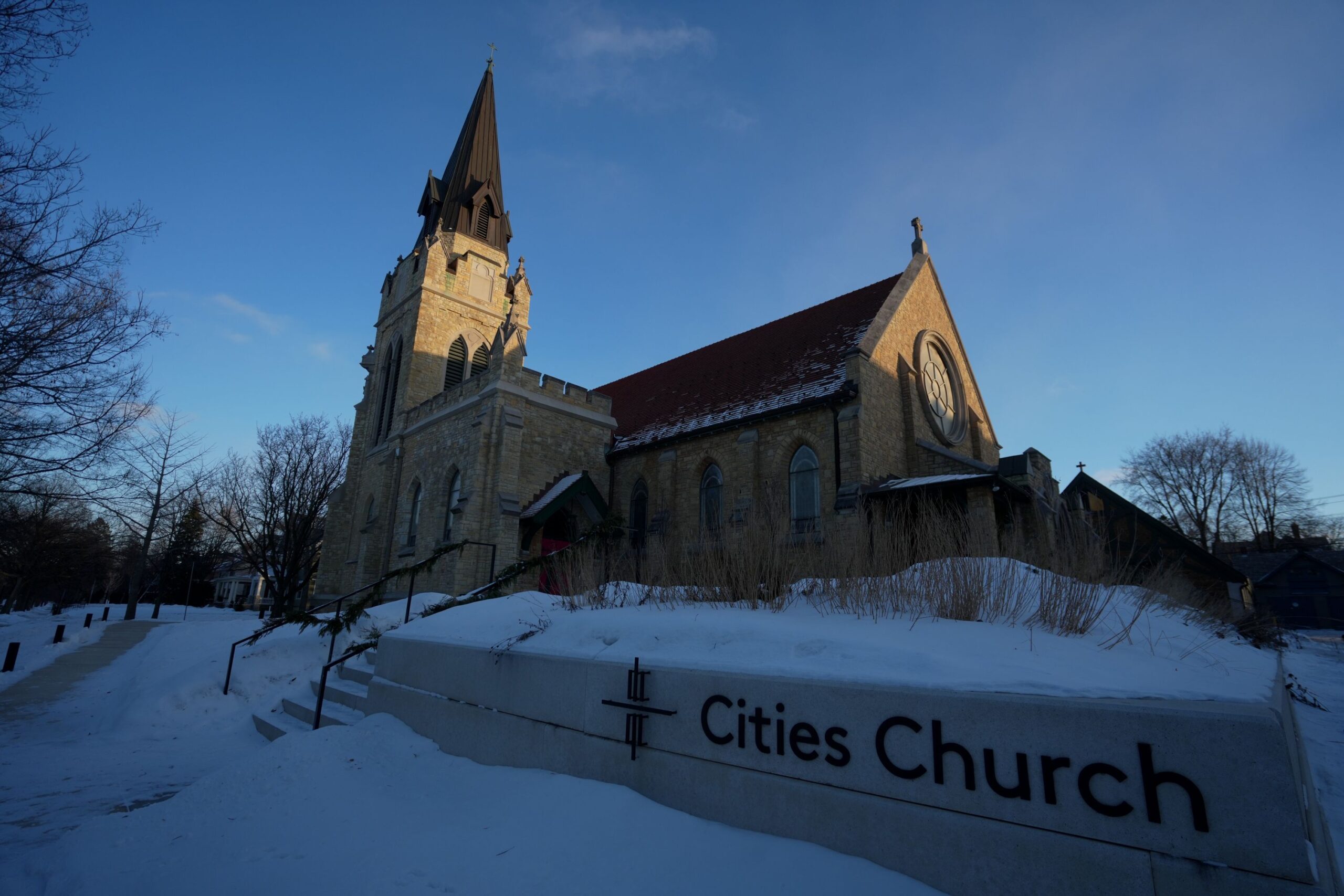
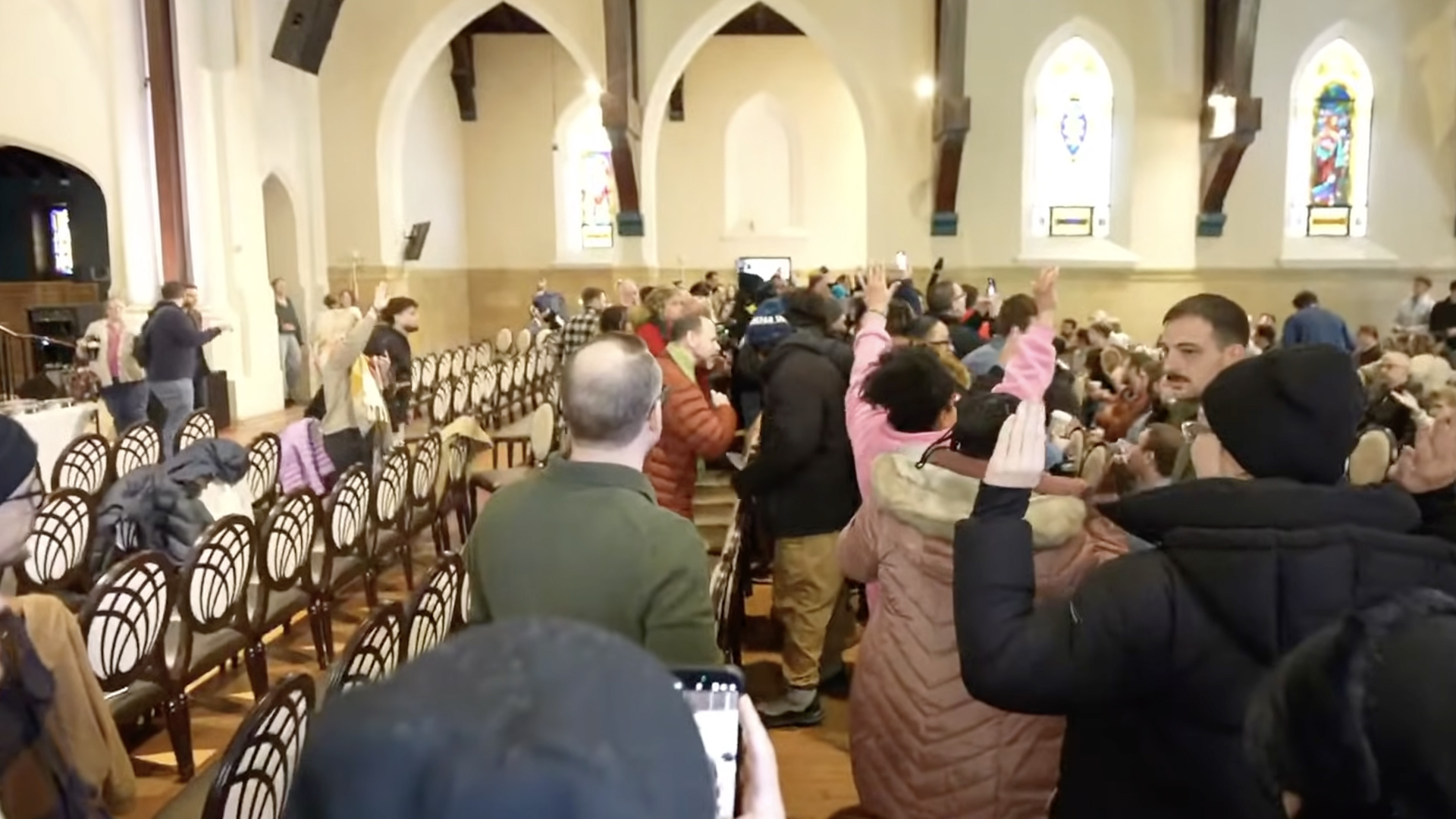
On Sunday morning, January 19th, approximately 30 protesters from the Racial Justice Network stormed into Cities Church in St. Paul, Minnesota during worship services. They chanted. They blew whistles. They demanded the congregation “inform themselves” about one of their pastors, David Easterwood, who also serves as acting field director for ICE in Minnesota.
They didn’t come to worship. They came to accuse. To disrupt. To occupy.
And they brought Don Lemon with them.
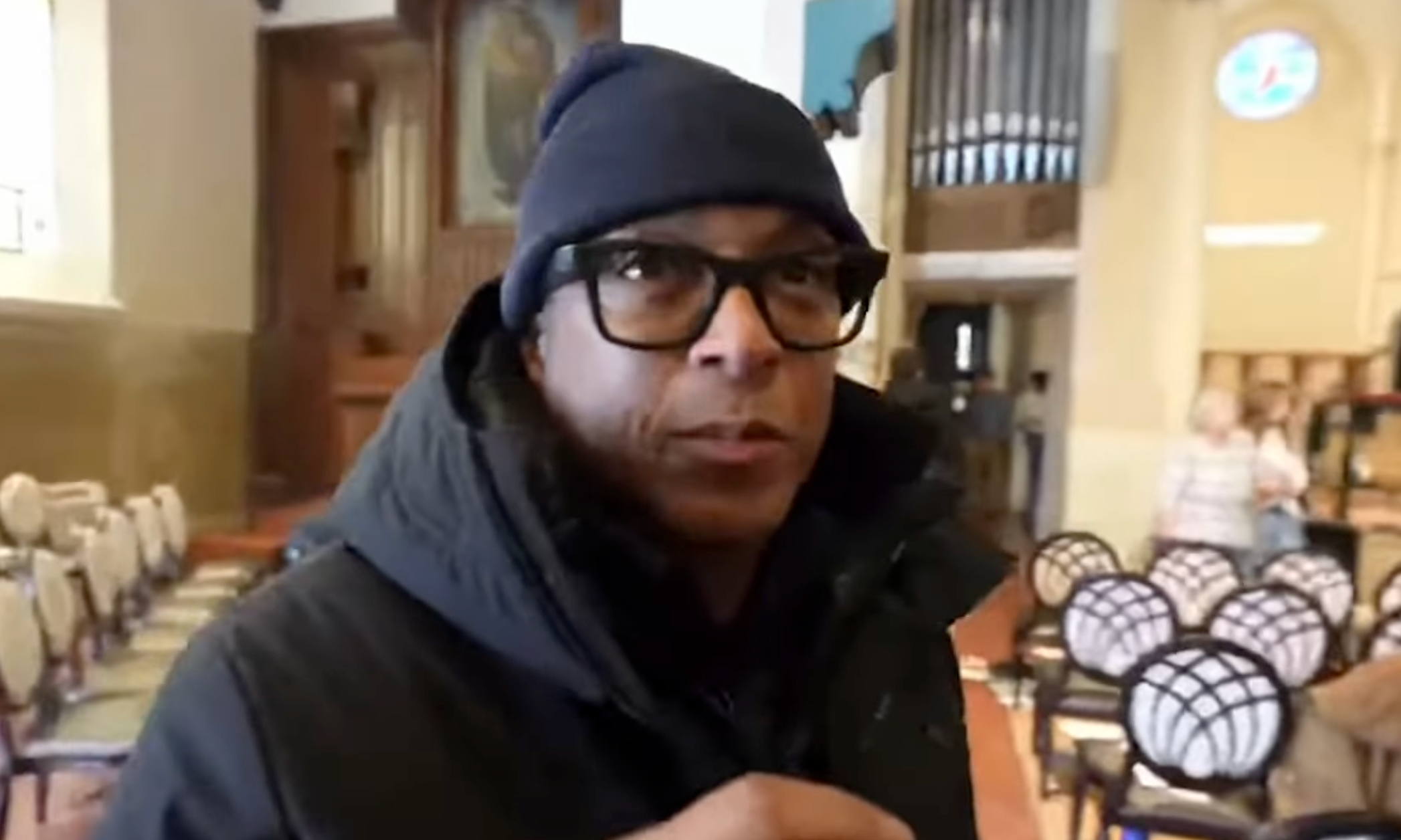
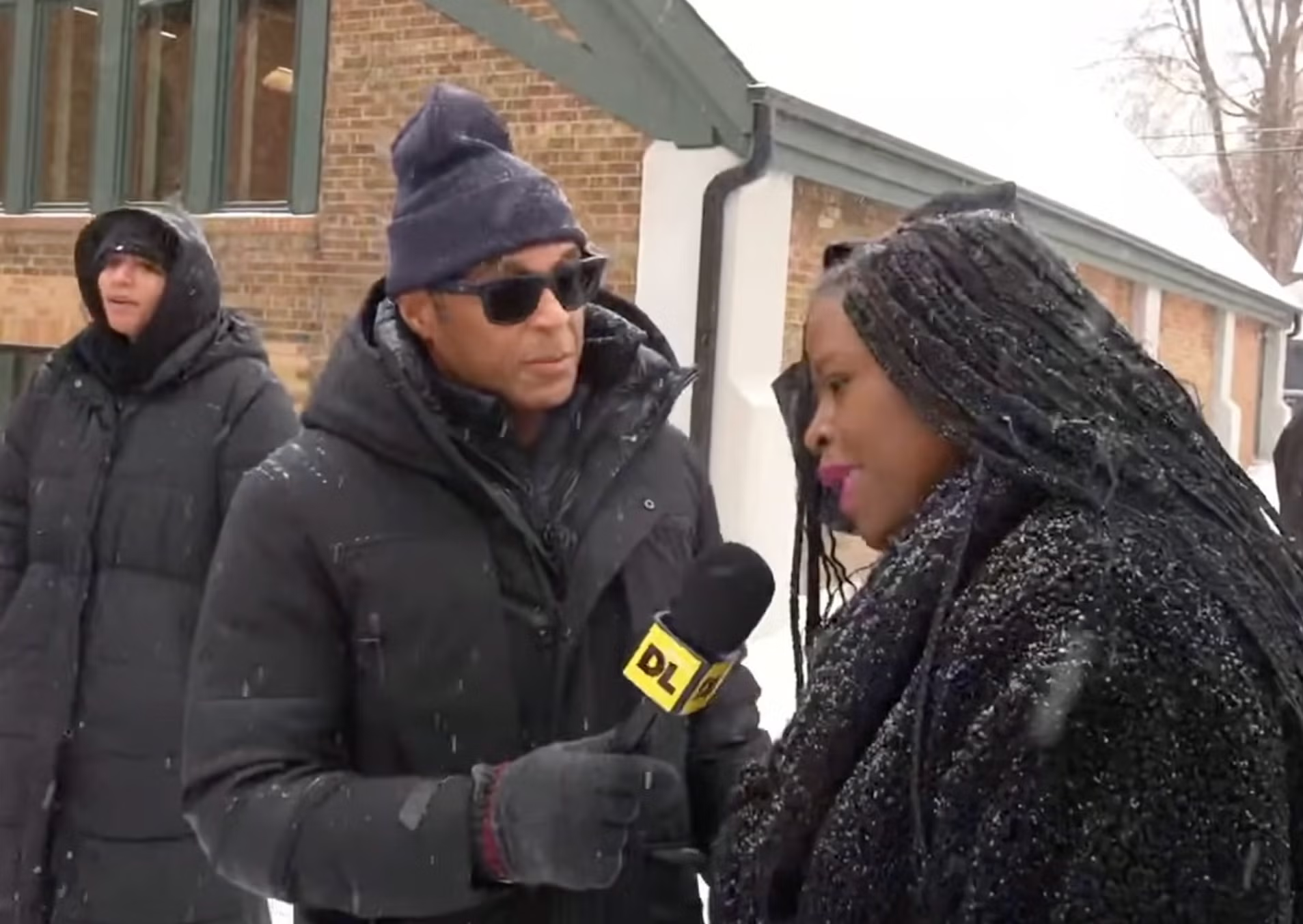
The former CNN host, now operating as an independent journalist, livestreamed the entire event. He interviewed protesters inside the sanctuary. He questioned lead pastor Jonathan Parnell during the service. When Parnell called the disruption “shameful” and asked Lemon to leave unless he was there to worship, Lemon invoked the First Amendment.
The Department of Justice is now investigating potential violations of the Freedom of Access to Clinic Entrances (FACE) Act, a 1994 federal law that prohibits using force, threat of force, or physical obstruction to interfere with people exercising their First Amendment right to religious worship.
The irony is almost too perfect to be real.
A law originally designed to protect abortion clinics from pro-life protesters is now being used to investigate progressive activists who violated a church service to protest immigration enforcement.
But the real story isn’t about legal irony. It’s about what happens when people become so convinced of their moral righteousness that boundaries, laws, sacred spaces, and basic human decency all collapse into irrelevance.
This is what downstream tribal reaction looks like when nobody pauses to think.
The Triggering Event: Renee Good
To understand the church invasion, you have to understand what came before it.
On January 7th, 2026, Renee Nicole Good, a 37-year-old mother of three and U.S. citizen, was shot and killed by ICE agent Jonathan Ross during an enforcement operation in Minneapolis. According to federal officials and video, Good attempted to run over Ross with her vehicle. According to eyewitnesses, and local officials including Minneapolis Mayor Jacob Frey, that account is “bullshit.”
The incident ignited nationwide protests. Minneapolis erupted. Schools closed. Thousands marched. Governor Tim Walz proclaimed January 9th “Renee Good Day.”
The emotional velocity was instant and overwhelming.
Within hours, the narrative solidified: ICE = murderers. Anyone associated with ICE = complicit. Protest = moral obligation.
The shooting led to an unprecedented breakdown in federal oversight, prompting the resignation of more than a dozen federal prosecutors (- Wikipedia) and lawsuits from the state of Minnesota against the Department of Homeland Security.
This wasn’t just a local tragedy. It became a national symbol. And symbols don’t require nuance. They require action.
Eleven days later, that action arrived at Cities Church.
The Psychology of Moral Permission
What happened at Cities Church wasn’t journalism. It wasn’t protest. It was tribal enforcement.
Psychologist Jonathan Haidt’s research on moral psychology is disturbingly relevant here. In The Righteous Mind, he explains that moral outrage doesn’t emerge from careful deliberation. It emerges from intuitive emotional reactions that the conscious mind then rationalizes.
The protesters didn’t ask themselves:
- Is this person actually responsible for Renee Good’s death?
- Does disrupting worship accomplish anything?
- Are we violating the very principles we claim to uphold?
They didn’t need to ask. The emotional mandate was already in place.
Once you’re convinced you’re fighting evil, normal constraints evaporate. Laws become obstacles. Sacred spaces become tactical targets. Children in the congregation become acceptable collateral damage.
Attorney Nekima Levy-Armstrong, speaking to Lemon during the livestream, framed it perfectly: “This cannot be a house of God while harboring someone directing ICE agents to wreak havoc on our community.” FOX 9
Notice the logic. The church isn’t a church if one of its pastors works for ICE. Therefore, invading it isn’t sacrilege. It’s correction.
This is how moral certainty rewrites reality.
The FACE Act: A Law That Forgot Which Side It Was On
The Freedom of Access to Clinic Entrances Act was signed into law by President Bill Clinton in 1994. Its purpose was clear: prohibit the use of force or physical obstruction to interfere with people accessing reproductive health services or exercising religious freedom at places of worship (that last part just to pacify the other side and get the Act signed).
For decades, the law was weaponized almost exclusively against pro-life activists. Data indicates 97 percent of FACE Act cases since the law’s inception have been against pro-life advocates. (- Breitbart)
The Biden administration took this to extremes, sending armed FBI agents to arrest people like Mark Houck or Paul Vaughn as if they were dangerous criminals (- Heritage Foundation), while ignoring over 100 attacks on pro-life pregnancy centers and churches following the Dobbs decision.
Now the same law is being investigated for use against progressive activists who stormed a church.
The schadenfreude practically writes itself.
But the deeper point is this: laws designed to protect “our side” eventually protect everyone. And when your side violates them, you don’t get to claim exemption because your cause feels righteous.
Don Lemon: Journalist or Activist?
Lemon’s defense is straightforward. He wasn’t part of the protest. He was covering it. He’s a journalist. First Amendment. All that stuff.
Assistant Attorney General Harmeet Dhillon isn’t buying it.
“A house of worship is not a public forum for your protest! It is a space protected from exactly such acts by federal criminal and civil laws! Nor does the First Amendment protect your pseudo journalism of disrupting a prayer service,” Dhillon wrote.
Here’s the uncomfortable question: at what point does “covering” a protest become participating in it?
If you follow protesters into a church during worship, livestream their chants, interview their leaders, and amplify their message to your audience… are you documenting an event or enabling it? Journalists are supposed to observe, not occupy. They’re supposed to report, not embed themselves as part of the story.
Lemon entered that church with the protesters. He stayed while they disrupted worship. He questioned the pastor while the congregation sat traumatized.
TMZ spoke with parishioner Caleb Phillips, who said the protesters “scared the hell out of a lot of good people” and that Lemon “should be ashamed of going into the church, seeing how upset everyone, especially children, were.”(- TMZ)
That’s not journalism. That’s presence as endorsement.
And presence, in this case, probably violated federal law.
The Collateral Damage Nobody Mentions
Let’s be clear about what actually happened inside that sanctuary. Children watched strangers storm their church. Elderly congregants sat terrified. A pastor trying to lead worship was shouted down and confronted.
For 23 minutes, worship was replaced with accusation.
For 23 minutes, sacred space was treated as a tactical target.
For 23 minutes, people who came to encounter God were forced to defend themselves against political theater.
This wasn’t “speaking truth to power.” Power wasn’t in that building. A congregation was.
And congregations are made of people. Real people. With children. With fears. With the reasonable expectation that when they gather to worship, they won’t be invaded by activists wielding moral certainty as a weapon.
Pastor Jonathan Parnell’s response was devastatingly simple: “We are here to worship Jesus. That is the hope of these cities. That is the hope of the world is Jesus Christ.” (- Fox News)
That’s not evasion. That’s clarity.
The protesters didn’t come to worship. They came to condemn. And in doing so, they became the very thing they claim to oppose: people who use force to silence others.
The Trap: When Your Cause Justifies Any Tactic
Here’s the pattern that keeps repeating:
Moral outrage → Tribal solidarity → Boundary collapse → Justified violation
Once you believe you’re fighting existential evil, every tactic becomes permissible. Disrupting worship? Necessary. Terrifying children? Unfortunate but unavoidable. Violating federal law? A small price for justice.
Social psychologist Philip Zimbardo’s research on the “Lucifer Effect” explains how ordinary people commit extraordinary cruelty when they believe they’re serving a higher purpose. When good people are placed in bad situations, they often act in ways that contradict their stated values because the situation provides moral permission.
The protesters at Cities Church didn’t think they were doing something wrong. They thought they were doing something righteous.
That’s the trap.
When moral certainty replaces moral reasoning, you stop asking whether an action is right. You only ask whether it serves the cause.
And if it serves the cause, nothing else matters.
What This Reveals About Tribal Collapse
The church invasion is a perfect diagnostic moment. It reveals what happens when:
Grief becomes permission
The death of Renee Good was real. The pain is real. But pain doesn’t justify violating sacred space.
Collective guilt replaces individual responsibility
David Easterwood wasn’t at the service. But the church was “harboring” him, so the church became complicit. This is guilt by association, not justice.
Emotion replaces strategy
What did the protest accomplish? Did it change ICE policy? Did it honor Renee Good? Did it persuade anyone? Or did it simply give protesters a dopamine hit of moral superiority?
The ends justify the means
If your cause is righteous enough, laws don’t apply. Boundaries don’t apply. Other people’s trauma doesn’t apply.
This isn’t activism. It’s tribalism wearing a justice costume.
The Question You’re Avoiding
Here’s where this stops being about “them” and starts being about you.
When was the last time you checked whether your moral outrage was leading you to violate principles you claim to hold?
Have you ever justified an action because the cause felt righteous, even when the tactic was wrong?
Have you ever dismissed someone’s trauma because they were on the “wrong side”?
Have you ever used collective guilt to punish individuals who weren’t actually responsible?
The protesters at Cities Church aren’t uniquely broken. They’re downstream products of a culture that has replaced moral reasoning with moral certainty.
And if you’ve participated in that culture, even passively, you’re part of the system that produces moments like this.
Final Note: Sacred Spaces Exist for a Reason
Worship spaces are not public forums. They’re not political battlegrounds. They’re not tactical targets.
They’re sanctuaries.
The word itself means “sacred place” or “place of refuge.” For centuries, societies across the world have recognized that some spaces must remain untouched by political conflict. Not because politics doesn’t matter, but because some things matter more.
When you violate a sanctuary, you’re not just breaking a law. You’re breaking a social contract that predates modern law. You’re saying that nothing is sacred. That no space is safe. That power determines everything.
The protesters at Cities Church don’t see it that way. They see themselves as heroes. As truth-tellers. As people who refuse to be silent in the face of injustice.
But heroism isn’t measured by how loud you are. It’s measured by how carefully you wield power.
And power, in this case, was wielded carelessly.
Children were traumatized. A congregation was violated. Federal law was broken. And for what?
A viral moment. A dopamine hit. The satisfaction of feeling righteous.
That’s not activism.
That’s addiction.
And if you can’t see the difference, you’re not awake. You’re just reacting.