The Prison You Built in Your Head: How Mind Traps Run Your Life Without Your Permission
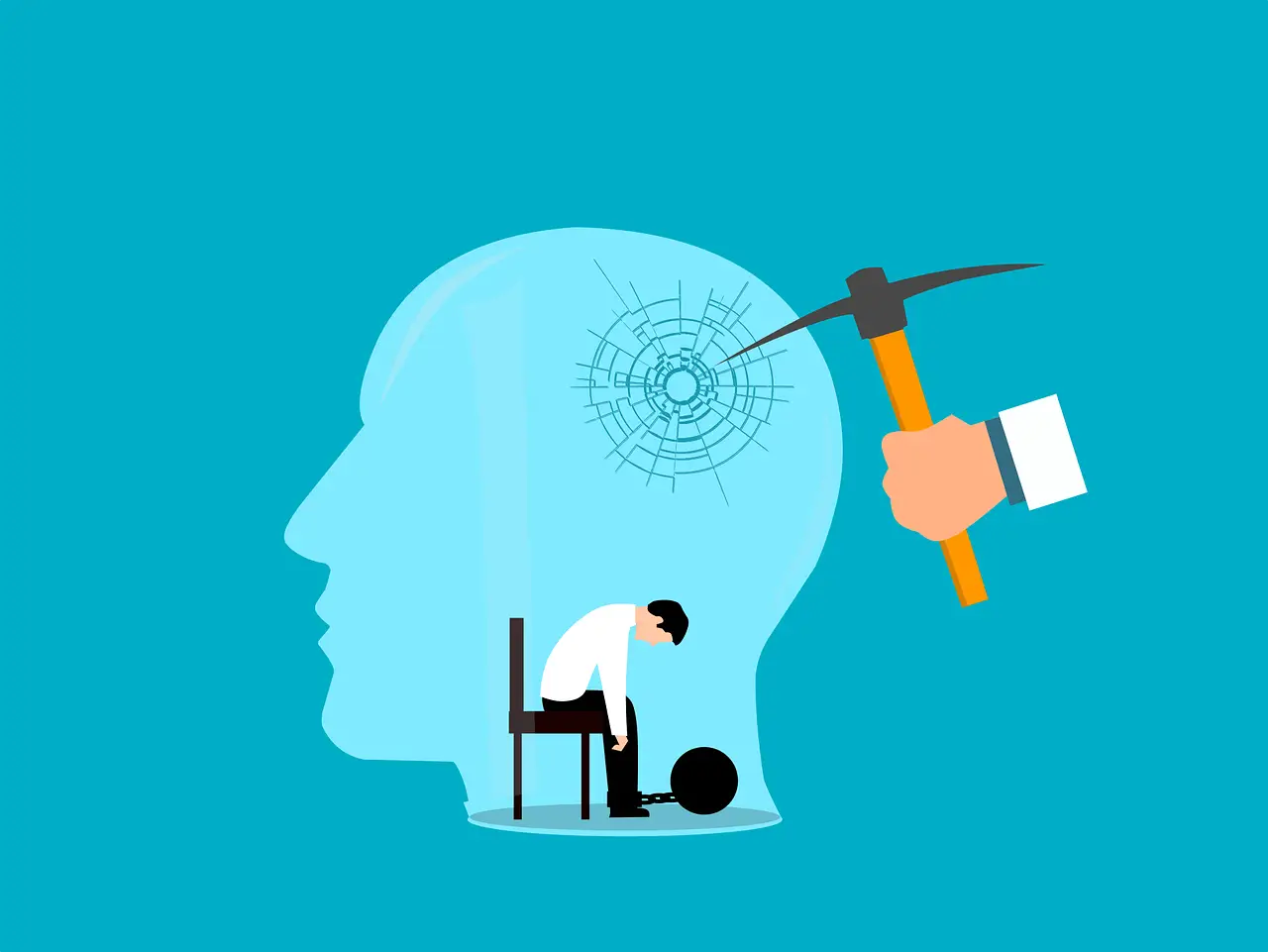
Most people imagine their biggest obstacles are external. Lack of time, lack of money, lack of opportunity, lack of support. But those are convenient villains. The real enemy is sitting between your ears. It’s the set of invisible constraints your mind builds and reinforces, not to sabotage you, but to protect you from discomfort you never agreed to face.
Psychologists call these “cognitive distortions,” “automatic thoughts,” or “schema-driven reactions.” Trap Think calls them mind traps… the psychological booby traps disguised as self-preservation. These traps keep you from risk, but they also keep you from growth. They keep you safe, but they keep you small. And the cruel part is that most people never realize their fears, excuses, and limitations aren’t reflections of truth, they’re echoes of conditioning.
As author David Foster Wallace once said in his famous Kenyon College address:

Mind traps are invisible because they feel like reality. They feel like certainty. They feel like instinct. But they are nothing more than carefully rehearsed stories.
And the longer you rehearse them, the more believable they become.

The Lie That Keeps You Exactly Where You Are
The most powerful mind trap is the one that whispers, “This is just who you are.” It’s the trap that convinces you your past equals your identity, that your flaws are permanent, that your limitations are innate. Once this story solidifies, your mind doesn’t need chains… you’ll stay put voluntarily.
Cognitive psychologist Carol Dweck’s research on fixed vs. growth mindsets uncovered a brutal truth:
A fixed mindset doesn’t just limit you, it imprisons you. It creates a life governed not by curiosity but by fear of being exposed. You stop trying things you aren’t immediately good at. You avoid challenges that could reveal weakness. You interpret failure as identity instead of information.
This trap thrives in silence. It thrives in isolation. And it thrives in people who have built their entire self-worth around being “naturally” good at something.
Here’s the harsh reality:
If your identity is based on avoiding discomfort, you will do anything — including destroying your own potential — just to stay comfortable.
The fixed mindset becomes self-reinforcing. The longer you tell yourself you can’t, the more your brain looks for evidence to prove you right. And your life becomes a loop designed by your fears, not your possibilities.
Mind traps aren’t random. They’re strategic. They exploit your deepest fears to keep you compliant.
Here are the three fears almost every human is ruled by:
Fear of failure – “If I try and fail, I’ll expose the truth about who I really am.”
Fear of rejection – “If I change, people won’t like me anymore.”
Fear of uncertainty – “If I step out of what I know, everything could fall apart.”
These fears don’t just influence your decisions, they shape your worldview. They distort probabilities, exaggerate risks, and shrink your sense of agency. Neuroscientist Lisa Feldman Barrett writes:
“What you feel is not a window into your future. It is a prediction from your past.”
Your brain predicts danger even when there is none. It sees threats where there are only possibilities. It reacts to discomfort as if it’s life-threatening because your physiology is still wired for survival in a world far more dangerous than the one you live in.
So when you hesitate, freeze, or back away, it’s not because something is wrong with you. It’s because your nervous system hasn’t learned to distinguish fear from growth.
Mind traps are not flaws. They are outdated survival tactics. And they only lose power when you call them what they are.

When Your Mind Would Rather Be Wrong Than Unsure
One of the most insidious mind traps is the illusion of certainty… the belief that clarity must come before action, that knowledge must come before movement, that understanding must come before effort. This sounds reasonable, but it destroys more lives than bad luck ever could.
Humans crave certainty because uncertainty feels like danger. Your brain evolved to prefer a wrong answer over no answer at all. That’s why people cling to limiting beliefs even when those beliefs hurt them. At least limitation feels stable.
In reality:
Most people don’t fail because they’re wrong. They fail because they refuse to move until they’re right.
Entrepreneur Derek Sivers once said:
You’re not lacking information. You’re lacking tolerance for ambiguity.
The mind tells you that uncertainty is a sign to stop. But uncertainty is the natural state of doing anything worthwhile. Certainty comes after action, not before it.
Mind traps don’t disappear when you challenge them once. They dissolve when you learn to treat discomfort as data instead of danger. And that shift requires one foundational belief:
Your thoughts are not truth… they are proposals. You have the right to reject them.
This is the moment people start changing. Not when they read motivational quotes. Not when they make five-year plans. Not when they “decide” they want a better life. People change when they stop treating every internal sensation as a command. And the moment you stop obeying your fears, your fears lose authority.
Here’s the uncomfortable part:
Escaping mind traps doesn’t make life easier. It makes life real. You start to notice how many of your limitations were self-authored. You begin to see how much time you lost waiting for courage to arrive on its own. You confront the reality that your mind has been negotiating against your future for years.
But this awakening is the beginning of freedom.
Because once you see the trap, you are no longer trapped.
Your first thought is conditioning.
Your second thought is choice.
Your third thought is identity.
Mind traps depend on you never getting to the second thought. But the moment you do… even once, your life begins to open. The walls crack. The loops break. The automatic patterns lose their inevitability.
This is how people transform. Not by silencing their mind, but by refusing to treat it like a dictator. The final truth is simple, brutal, and liberating:
Your mind will try to imprison you.
Your decisions are what set you free.