The Enemy Factory: How Tribalism Kills Thinking and Steals Your Name
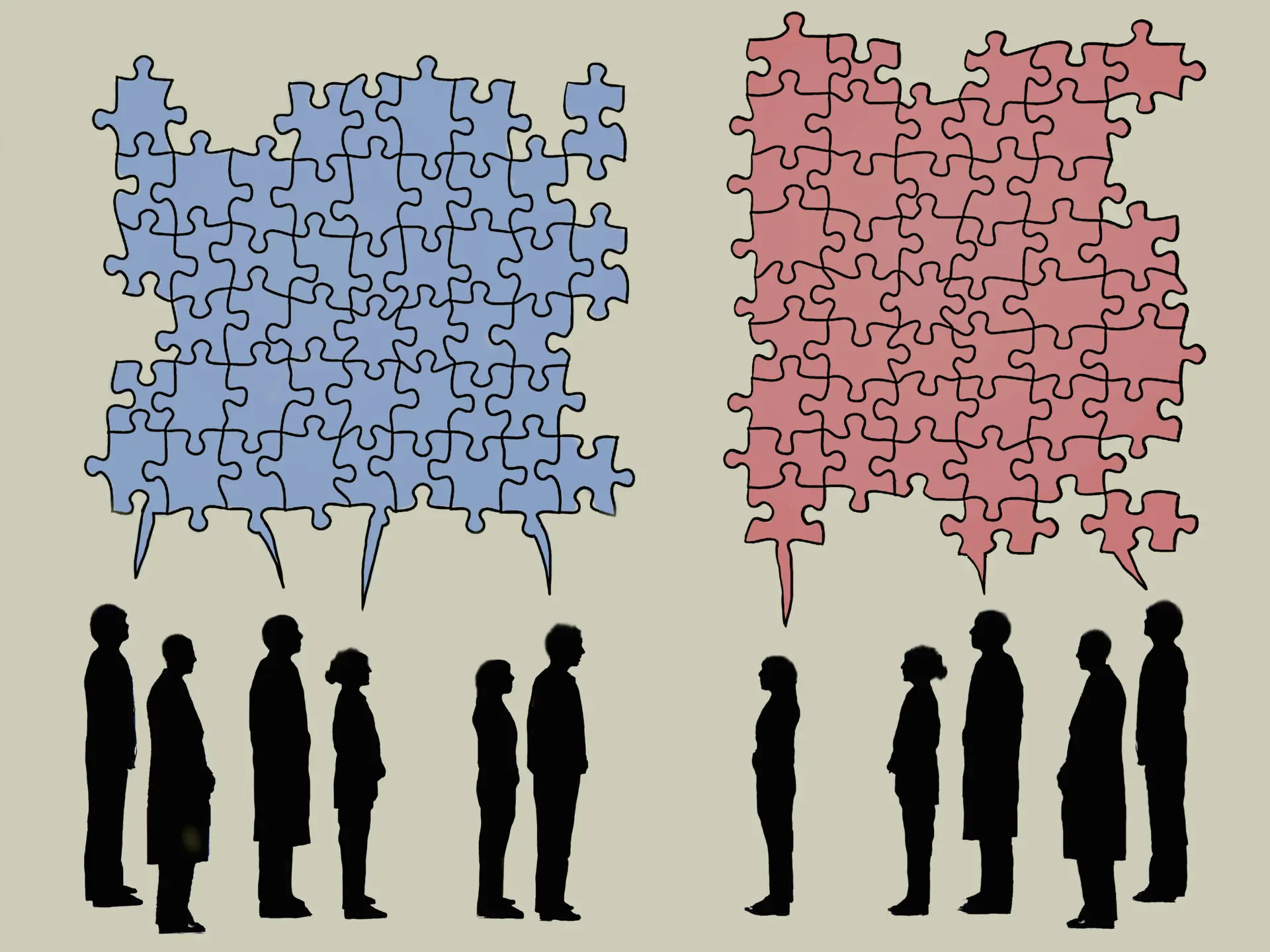
Tribalism thrives because it gives people something intoxicating: relief from uncertainty. In a world that feels chaotic and fast, tribes whisper, “Don’t worry about figuring it out... we already decided for you.” They offer identity, purpose, and protection without the burden of responsibility. And that is exactly why they are so dangerous. Social psychologist Jonathan Haidt put it plainly:


He’s right. Tribes don’t want your honesty. They want your allegiance. And they’ll take your clarity, your autonomy, and your sense of self in the process. If you feel uncomfortable already, good. Someone needs to say this:
Tribalism is identity for people too afraid to build one.
That belonging feels good at first. It shields you from having to make hard decisions or confront uncomfortable contradictions. If the tribe already has an opinion about politics, morality, culture, or which voices deserve to be heard, then you don’t have to wrestle with nuance. You simply inherit a worldview you didn’t build. It’s effortless — and that’s the trap. The moment you internalize that comfort, you stop noticing that every inch of convenience has come at the price of your independence.
Erich Fromm once wrote that people often “escape into anything that relieves them of the burden of choice.” Tribalism relieves that burden exquisitely. But the relief is sedation. The warmth you feel isn’t strength — it’s anesthesia. The more you adopt the tribe’s certainty, the less you rely on your own judgment. And the less you use it, the faster it withers. Before long, the things you believe aren’t yours. They’re borrowed. You repeat them with conviction because everyone around you repeats them with conviction. But conviction without examination is just loyalty in a mask.
Every tribe eventually creates an enemy. It has to. Without an enemy, there is no boundary, no identity, no unifying fear to keep people obedient. Philosopher Bertrand Russell wasn’t exaggerating when he wrote, “Collective fear stimulates herd instinct, and tends to produce ferocity toward those who are not regarded as members of the herd.” That ferocity is the glue. It tells the tribe who to hate, who to distrust, and who must be silenced for the “greater good.”
Once you accept a tribe’s story about its enemies, you stop evaluating people as individuals and start seeing them through a template. Opponents aren’t human beings with motives and contradictions... they’re symbols, threats, caricatures. This simplifies the world into two convenient categories: us and them. Good and evil. Enlightened and ignorant. It also ensures you never scrutinize your own side too deeply. Because what kind of loyal member questions the tribe when the “enemy” is so obviously dangerous?
Political psychologist Karen Stenner observed that the strongest authoritarian instincts don’t come from dictators, they come from ordinary people who “fear diversity of thought.” You can see this everywhere. If you publicly disagree with your own side, the backlash is swift and vicious. To the tribe, disloyalty is more threatening than the opposition itself. You become proof that free thought is infectious, and that makes you a contaminant. There is no faster way to be exiled from a tribe than to point out its inconsistencies.
This is why tribalism destroys individuals from the inside out. It starts by outsourcing your thinking — the tribe tells you what to believe. Then it outsources your identity — the tribe tells you who you are. Finally, it outsources your morality — the tribe tells you who deserves sympathy and who deserves contempt. By the time that process is complete, your inner voice is gone. You’ve replaced it with the hive’s voice and convinced yourself it was yours all along.
There’s a reason tribalism is powerful: it gives people protection from discomfort. Being part of a group (political, ideological, religious, social, even recreational) gives you a sense of belonging that feels like confidence, even when it’s not. You don’t have to wrestle with nuance. You don’t have to challenge your assumptions. You don’t have to be wrong in public.
Your tribe decides your opinions for you. Your job is just to repeat them with passion. This is why tribalism spreads like a virus in chaotic times.

Breaking out of a tribe is uncomfortable, because it forces you to confront the space you once filled with collective certainty. You lose the emotional safety net. You lose the ready-made enemies. You lose the dopamine hit of belonging. But what you gain is something far rarer: the ability to see clearly again.
When you stop identifying with a tribe, ideas stop feeling like threats. Conflicting viewpoints stop feeling like personal attacks. Conversations stop turning into battles for dominance. You start thinking for the sake of understanding instead of thinking for the sake of winning. Paul Graham summarized this shift in one devastating line: “People don’t reason in order to find the truth. They reason in order to win arguments.” Tribalism trains you to win arguments. Individuality trains you to find truth.
Ayn Rand — polarizing as she is — was correct when she said:
Most people never fully inhabit their individuality because standing alone requires more courage than standing with a crowd. But the alternative is becoming a mouthpiece for a group that would replace you in an instant if you stopped being useful.
Individuality doesn’t mean isolation. It means sovereignty. The ability to hold your own beliefs, speak in your own voice, and choose your own enemies instead of inheriting them from a collective. It means accepting the risk of being wrong in exchange for the possibility of being honest. It means thinking with your whole mind instead of merely repeating what earns applause.
Tribes will always exist. But you don’t have to surrender your judgment to one. The moment you stop letting a group dictate what you think, who you distrust, what you fear, and what you worship, you step into a role most people never achieve: a human being with a mind that belongs to them and not to the herd.
And once you experience that clarity, tribalism stops looking like community and starts looking like captivity. The world becomes bigger. You become stronger. And the truth becomes something you can finally see... not something you need permission to believe.