The Event and the Speed of the Reaction
Yesterday, an incident involving U.S. Immigration and Customs Enforcement (ICE) entered the national news cycle.
According to initial reports, a 37-year-old woman was shot and killed by an ICE agent during an encounter in which she was driving a vehicle and appeared to be attempting to run the agent over. The agent fired. The woman died at the scene.
Those are the reported facts as they stand… sparse, incomplete, and still under review.
Within hours, however, something very predictable happened.
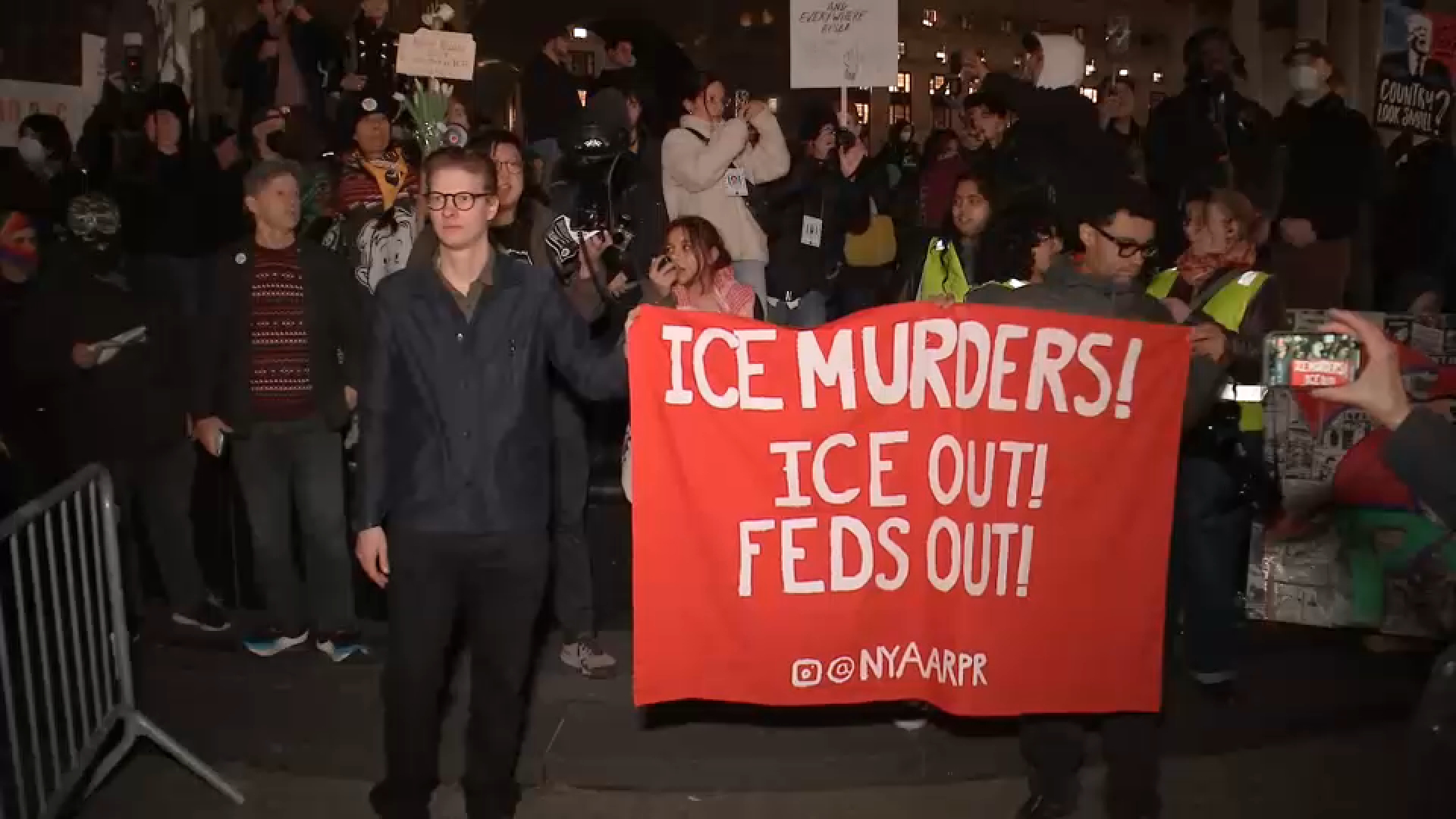
Protests formed. Hashtags trended. Moral conclusions hardened. The incident was rapidly absorbed into a broader narrative about immigration enforcement, state violence, and injustice; often without waiting for additional information, context, or investigation.
This article is not an attempt to retry the incident in public.
It is an attempt to examine what reliably follows incidents like this — and why, despite the intensity of reaction, very little ever changes.
Breaking News Is a Vacuum… and Rage Rushes to Fill It
Breaking news creates a void.
Facts are partial. Motives are unclear. Context is missing. Investigations are ongoing. But the human mind does not tolerate ambiguity well… especially when identity, morality, or tribal allegiance is at stake.
So something else rushes in to fill the gap.
Narratives.
Narratives move faster than facts because they don’t wait for confirmation. They don’t require patience. They reward immediacy. And social platforms are engineered to amplify whatever generates the strongest emotional response in the shortest amount of time.
Outrage thrives in this environment not because it is accurate, but because it is efficient.
Efficiency, however, is not the same thing as truth.
By the time additional details emerge… about the encounter, the circumstances, the legal framework governing ICE operations, or the woman’s actions, the emotional posture of the public has already calcified.
The conclusion comes first. Understanding is optional.
From Incident to Symbol
Almost immediately, the woman ceased to be treated as an individual involved in a specific encounter and became a symbol. To some, she symbolized state brutality. To others, lawlessness. To still others, the inevitability of violent enforcement.
Symbols are powerful, but they are also flattening.
Once an event is symbolic, complexity becomes inconvenient. Legal nuance becomes suspect. Any detail that complicates the narrative is treated as a distraction or a defense of the indefensible.
This is not unique to immigration issues. It happens after police shootings. Military actions. Court decisions. Elections. The individual event becomes raw material for a moral play already written in advance.
And once that happens, protest becomes almost automatic.
The Protest Reflex
Protests erupt because they feel like action. They feel collective. They feel visible. They feel righteous. But feeling powerful and being effective are not the same thing. The uncomfortable question most protests never answer is simple:
Who is being pressured, and how?
Is a specific decision-maker being targeted?
Is a policy lever being pulled?
Is there a measurable demand with a mechanism for enforcement?
Or is the protest primarily expressive… designed to display moral alignment rather than produce change?
In many modern cases, including those surrounding immigration enforcement, protests function less like strategy and more like ritual. They release emotion. They signal virtue. They affirm tribal belonging.
But they rarely alter incentives for the institutions involved.
Why Immigration Enforcement Is Especially Vulnerable to Misfire
Immigration enforcement is one of the most layered policy domains in modern governance.
It involves:
Federal law passed by Congress
Executive branch enforcement priorities
Agency-level discretion
Court rulings
International considerations
Human realities on both sides of enforcement
That complexity makes it uniquely resistant to symbolic pressure. An ICE agent involved in a fatal encounter is not setting immigration policy. A street-level protest does not rewrite federal statute.
Moral outrage does not automatically translate into legislative change. Yet public reaction often treats immigration enforcement as if it were a single villain with a single switch that can be flipped through collective anger.
This is not how power actually works.
Rhetoric on Both Sides, Responsibility on Neither
In the aftermath of incidents like this, language hardens fast… but responsibility evaporates just as quickly.
On one side, enforcement itself is treated as inherently illegitimate. The presence of ICE becomes the offense, not the behavior that triggered the encounter. Any use of force is presumed unjust, and any discussion of personal decision-making is dismissed as deflection. Law is treated as an abstraction, as if it’s something that exists only until it becomes inconvenient.
On the other side, the response can be just as reductive. The event is framed as unavoidable. Responsibility is flattened entirely onto the individual involved, and any scrutiny of enforcement practices is waved away as weakness or hostility toward order itself.
Both sides offer moral certainty. Neither offers accountability.
What gets lost in this exchange is the uncomfortable reality that violent encounters do not occur in a vacuum. They emerge from a chain of decisions… by individuals, by officers, and by institutions that are all operating within constraints that include law, consequence, and human judgment.
As rhetoric escalates, space for serious discussion collapses. Nuance is treated as betrayal. Inquiry is mistaken for sympathy. And the actual mechanisms that could reduce violent encounters, including clearer expectations of lawful behavior, personal restraint, civic responsibility, and proportional enforcement, are pushed out of view.
When law is treated as optional and authority as inherently illegitimate, confrontation becomes more likely, not less. That reality is rarely acknowledged by crowds gathered in outrage, even as they demand safety, justice, and restraint from others.
Why This Pattern Keeps Repeating
This cycle persists not because it produces change, but because it produces relief.
Outrage offers an emotional shortcut. It allows people to discharge anger without examining their own assumptions. It replaces reflection with alignment and turns complex events into opportunities for moral self-identification. In this way, outrage becomes less about what happened and more about who we are signaling ourselves to be... especially if we can hit record first.
The mistake is believing the goal is institutional change alone.
Institutions respond slowly because they are designed to. But individuals change even more reluctantly… particularly when outrage allows responsibility to be outsourced. It is easier to blame a system than to confront the uncomfortable possibility that personal behavior, cultural norms, and civic disengagement play a role in repeated outcomes.
So the pattern repeats: a shocking event, immediate moral positioning, collective expression, and then nothing inward-facing. No reassessment of how people interact with authority. No reflection on how ignoring law, escalating encounters, or rejecting legitimacy increases risk. No pause to ask whether constant outrage trains people to expect absolution rather than consequence.
What looks like resistance is often just avoidance.
And avoidance, repeated at scale, becomes culture.
Action That Looks Like Action… and Action That Actually Is
This is where many people misunderstand what change actually requires.
Marching feels like participation. Chanting feels like solidarity. Posting feels like engagement. These actions create the sensation of movement without demanding personal cost or introspection. They usually point outward toward institutions, systems, agencies, and abstractions.
But TrapThink starts from a different premise:
A society does not decay from the top down alone. It decays from the inside out.
Real change begins with individuals reclaiming responsibility. For their behavior, their choices, their relationship to law, and their willingness to accept consequences rather than explain them away. It begins when people stop treating authority as something that only exists to be challenged, and law as something that only applies to others.
This does not mean blind obedience. It means sober recognition that social order is a shared burden, not a one-sided demand. Enforcement becomes more dangerous when norms erode. Encounters escalate when restraint disappears. Chaos grows when legitimacy is rejected but nothing replaces it.
Protests that ignore this reality are not disruptive to power, they are disconnected from it.
If people want fewer violent encounters, fewer tragedies, fewer names added to the news cycle, the work is unglamorous and personal: understanding consequences, choosing restraint, engaging lawfully, and refusing the cultural impulse to treat every rule as optional and every authority as an enemy.
That work does not trend.
It does not chant.
And it does not absolve.
But it does change outcomes.
Final Thought: Rage Is Easy. Influence Is Rare.
The death of a person… any person, deserves seriousness, not spectacle. Understanding an event does not mean excusing it. Resisting outrage does not mean endorsing authority. It means recognizing that emotion without strategy is not power.
Outrage feels like movement. Understanding feels like delay.
But delay is often where truth lives and where real change begins. If the goal is justice, not performance, then the hardest question remains:
Are we trying to be seen reacting… or are we trying to actually change what happens next? Because that starts within us. I have a hard truth to tell you. If you are agitated that this event occurred to the point of feeling spurred to action…
You… are trapped.