The Color Revolution Playbook: What’s Happening in Minneapolis and Why You’re Being Played
Part I: What Is a Color Revolution?
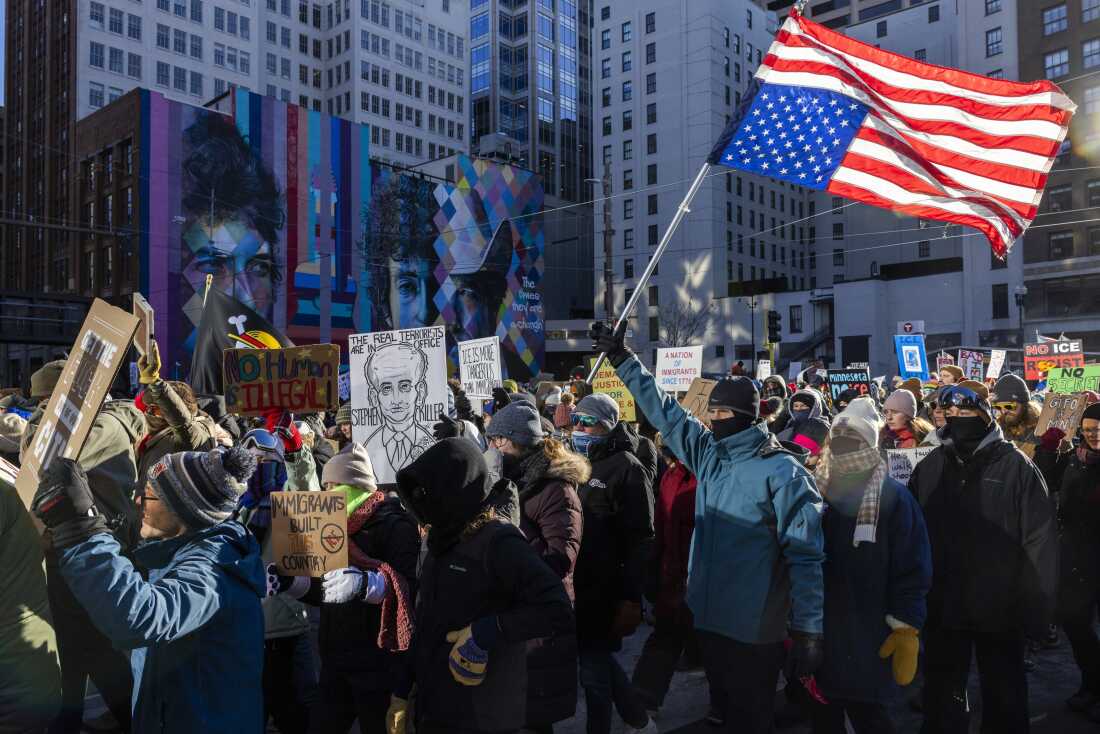
A color revolution is a coordinated political operation designed to destabilize and replace a government without conventional warfare. The term comes from a series of regime changes in the early 2000s: Serbia’s Bulldozer Revolution (2000), Georgia’s Rose Revolution (2003), Ukraine’s Orange Revolution (2004), Kyrgyzstan’s Tulip Revolution (2005). Each looked like a spontaneous popular uprising. None of them were.
Russian Defense Minister Sergei Shoigu called it “a new approach to warfare that focuses on creating destabilizing revolutions in other states at low cost and with minimal casualties.” Whether you frame it as democracy promotion or regime-change warfare, the mechanics are consistent and well-documented.
Political scientists have identified a reliable seven-stage playbook: Delegitimize the target government as corrupt or authoritarian. Pre-emptively accuse them of the very crimes you intend to commit. Build infrastructure — fund and train NGOs and activist networks to repeat a unified message while appearing independent. Create symbols that simplify complex issues into emotional binaries. Amplify a crisis — a triggering event that ignites pre-positioned networks. Mobilize coordinated mass protests disguised as organic community response. Finally, pressure the security forces into defection or paralysis.
The funding architecture is public record. The National Endowment for Democracy, Open Society Foundations, USAID, Tides Foundation, Sixteen Thirty Fund — these organizations have funded color revolution operations across Eastern Europe, the Middle East, and beyond. In Kyrgyzstan, one organizer admitted the uprising would have been “absolutely impossible” without coordinated American effort. The money trail isn’t conspiracy. It’s tax filings and grant databases.
Not every protest is a color revolution. Real uprisings are messy, disorganized, contradictory. Color revolutions are suspiciously coherent — same messaging, same training, same rapid mobilization, same funding sources. The presence of genuine grievances doesn’t make an operation less coordinated. It makes it more effective.
Part II: The Minneapolis Pattern
In December 2025, DHS launched Operation Metro Surge, deploying 2,000–3,000 federal agents to Minneapolis — five times the size of the city’s entire police department. Then came two fatal shootings.
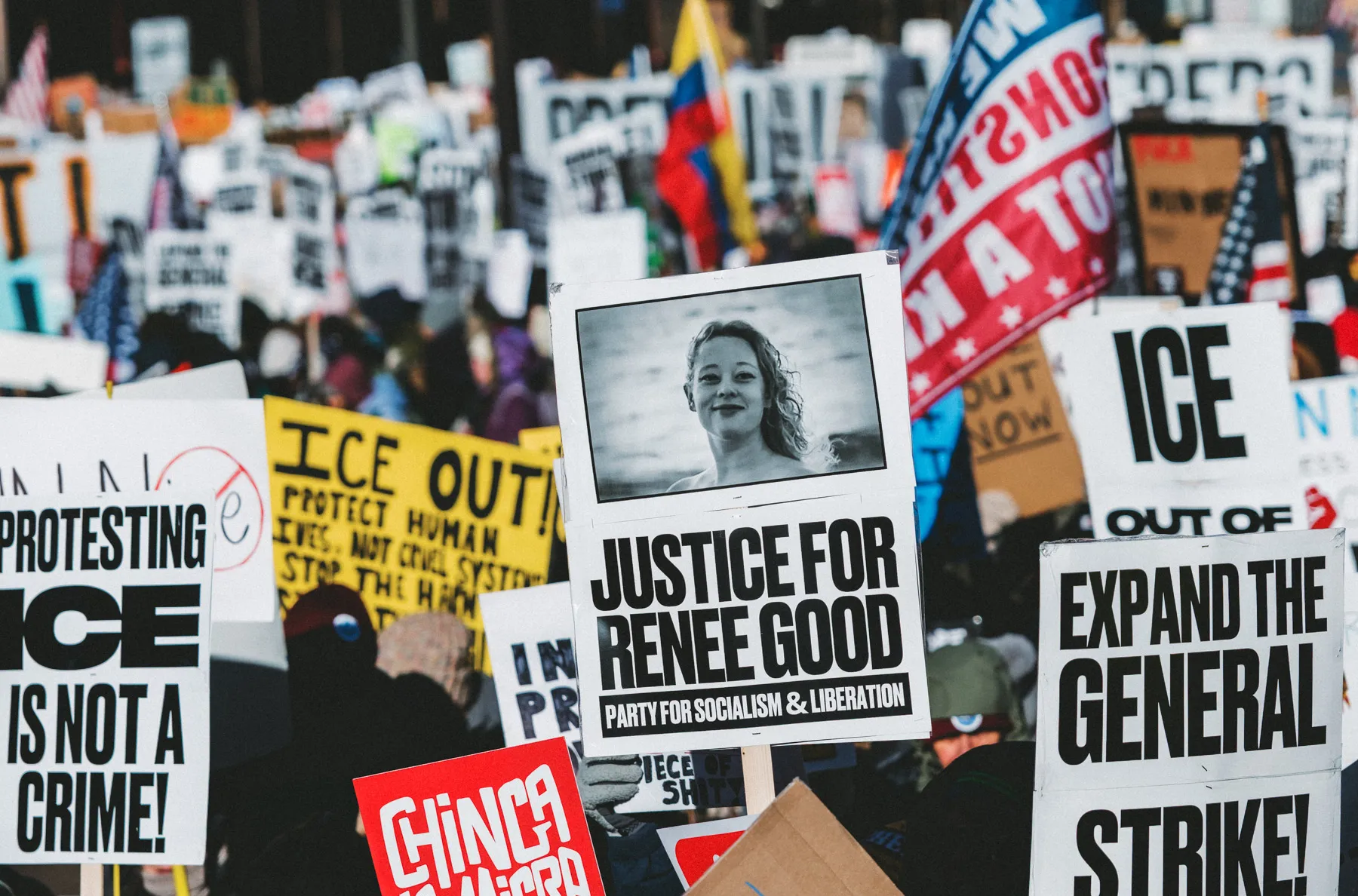
January 7: ICE agent Jonathan Ross shot and killed Renée Good, a U.S. citizen, during a vehicle encounter. Official narratives conflicted with video evidence. January 24: Border Patrol agents shot and killed Alex Pretti, a 37-year-old ICU nurse and U.S. citizen. Multiple verified videos show him filming with his phone, helping a woman an agent had knocked down, being pepper-sprayed, wrestled to the ground, disarmed by one agent, then shot approximately ten times by two others. DHS initially claimed he “arrived to inflict maximum damage.” Their own preliminary report to Congress never states he reached for his weapon.
Both victims were U.S. citizens with no criminal records. Both became immediate symbols. Now watch the playbook activate.
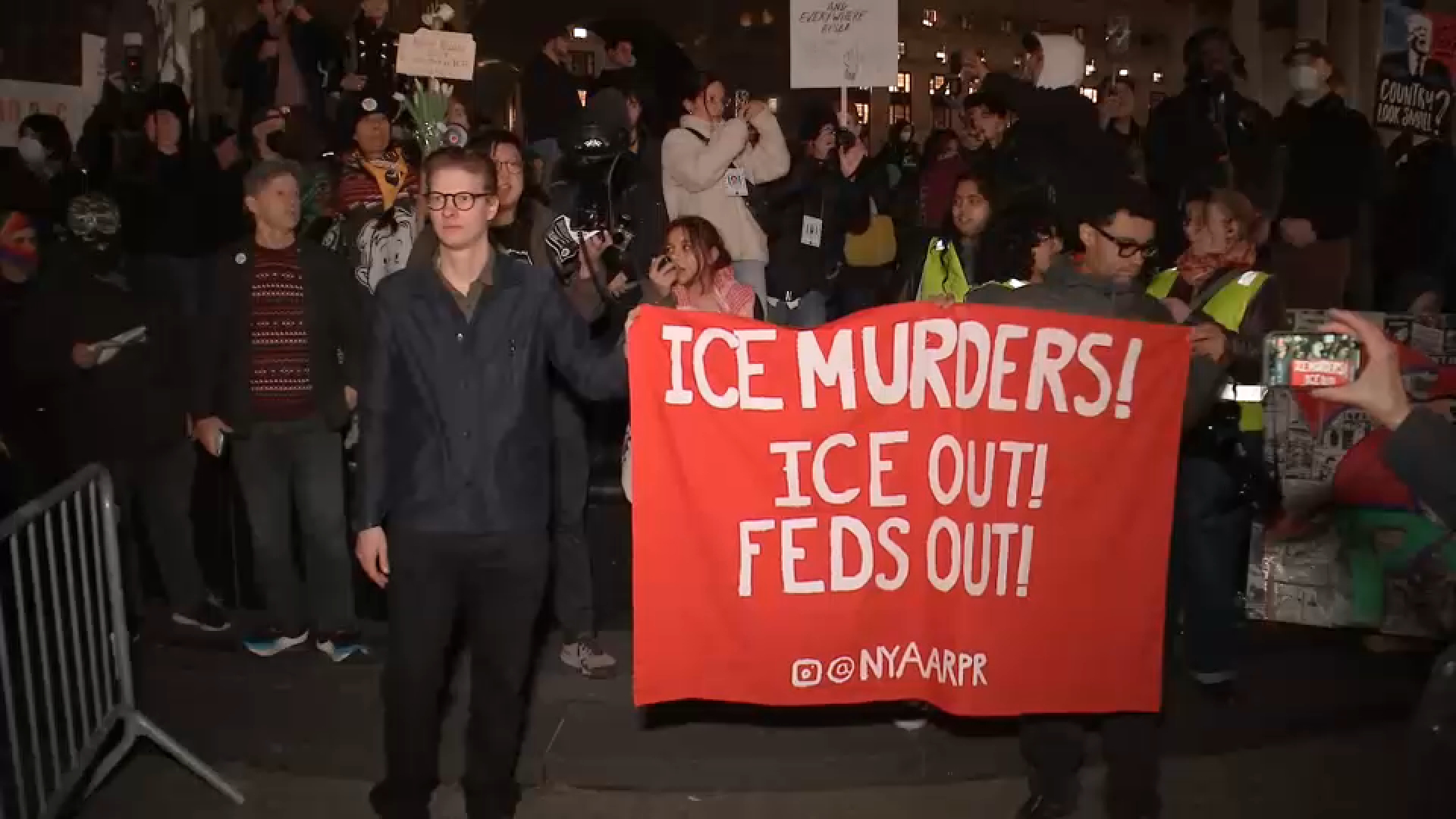
Delegitimization: Federal agents were immediately characterized as an “occupying force,” “terrorists,” and “abductors” — consistent language across dozens of organizations. Governor Walz and Mayor Frey positioned themselves in direct opposition to federal authority.
Pre-emptive accusation: By labeling lawful arrests “kidnappings” and “abductions,” activist organizations pre-emptively justified any interference with federal enforcement.
Infrastructure: The response revealed systems that could not have been built in days. License plate databases of federal vehicles. Real-time Signal networks. “Eyes on ICE” training that drew 200,000 viewers in its first session. ICE sighting hotlines. Rapid-response teams that were already on scene at Glam Doll Donuts before Pretti was shot — because their tracking network had already flagged the agent concentration there. This was activated infrastructure, not improvised infrastructure.
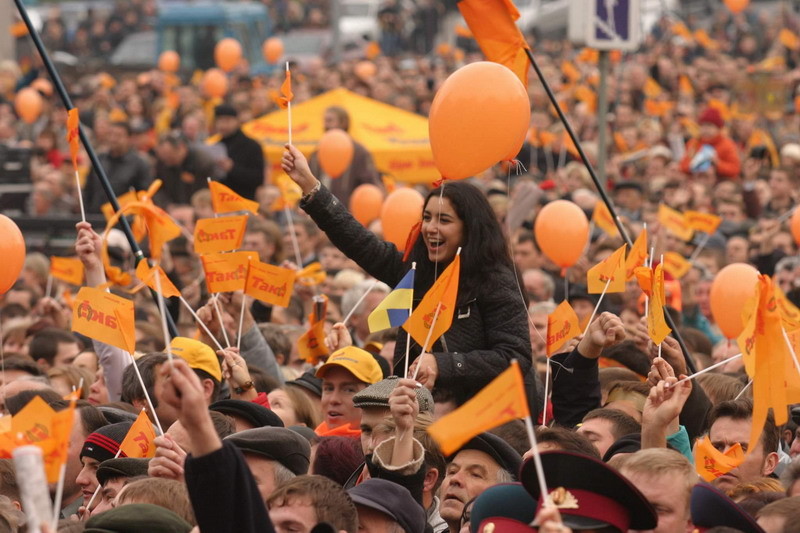
Symbols and mobilization: Whistles became the unified protest symbol. The January 23 “ICE Out” general strike shut down hundreds of businesses, cultural institutions, and labor unions simultaneously — coordinated with military-like precision across the entire state. A planned nationwide shutdown on January 30 extended the model to Minneapolis, Cleveland, New York, and Los Angeles.
Funding: A Washington Free Beacon investigation documented the money. Sunrise Movement Twin Cities holds trainings on “how to stop ICE & build a revolution.” COPAL MN received $50,000 from Tides Foundation and $185,000 from Sixteen Thirty Fund. Defend the 612 is funded through Rockefeller Philanthropy Advisors. The major funders: Open Society Foundations, Ford Foundation, Tides Foundation, Sixteen Thirty Fund, MacArthur Foundation. These are not small grants. This is sophisticated operational funding.
Pressure on enforcement: Late-night “noise demonstrations” at ICE agent hotels. Doxxing of agent identities and addresses. Following agents home. Border Patrol commander Bovino eventually relocated agents out of Minneapolis “for the officers’ safety.”
The traditional color revolution goal is regime change. Minneapolis adapts the model: the goal here is jurisdictional nullification — making federal law enforcement operationally impossible in sanctuary cities. Whether that’s civil disobedience or coordinated undermining of federal authority, the pattern is undeniable.
Part III: The Trap — And How You’re Already In It
Here’s the part nobody wants to hear: this framework is designed to capture you. Both sides.
If you support immigration enforcement: You see lawless mobs funded by billionaire globalists trying to overthrow rule of law. You feel righteous anger. You want crackdowns. You’ve been captured.
If you support immigrant rights: You see federal stormtroopers murdering innocent people. You feel righteous anger. You want resistance. You’ve been captured.
Both reactions are designed outcomes. The binary — Side A: order and borders. Side B: rights and resistance — is the trap itself. Once you pick, every new piece of information gets filtered through your tribe. The algorithm ensures it. Within 48 hours of any triggering event, you’re living in a personalized reality bubble where your gut reaction appears universally correct.
The outrage economy makes this worse. Media profits from engagement. Outrage drives engagement. So you’re fed content optimized to make you angry. “Federal agents murder innocent nurse” gets clicks. “ICE agent acts in self-defense” gets clicks. “This incident requires investigation” gets nothing. You’re not being informed. You’re being farmed.
The expertise illusion seals the deal. After a few days of videos and articles, you feel certain. You don’t know what happened. You saw edited clips from selected angles, filtered through agenda-driven sources. You don’t have complete information — but you’re expected to have a confident opinion anyway. That’s by design.
Part II: Pattern Recognition in Minneapolis
The Triggering Event: Operation Metro Surge
In December 2025, the Department of Homeland Security launched Operation Metro Surge, deploying between 2,000 and 3,000 ICE and Border Patrol agents to Minneapolis—a force roughly five times the size of the Minneapolis Police Department’s 600 officers. DHS called it “the largest immigration enforcement operation ever carried out.”
The operation focused on the Twin Cities area, with stated objectives of apprehending individuals with deportation orders and investigating alleged fraud cases. President Trump specifically referenced fraud cases involving government funds and the Somali community.
This operation became the catalyst for what followed.
The most dangerous trap is moral certainty. Once you’ve decided this is good versus evil, you stop questioning your own side entirely. If ICE agents are villains, you stop asking why activist networks had tracking infrastructure ready before the shootings, or whether trained confrontations are endangering the people they claim to protect. If ICE agents are heroes, you stop asking why official narratives keep conflicting with video evidence, or whether deploying five times a city’s police force is proportionate enforcement.
While you’re fighting about heroes and villains, here’s what’s actually happening: federal authority is being challenged in specific jurisdictions. Precedent for resistance is being established. Institutional trust is being destroyed on both sides. Legal norms are being stress-tested. The temperature is rising. This is not fundamentally about immigration. Immigration is the vehicle.
Your anger is real. Your concerns are legitimate — whichever side they’re on. And both are being used. Both sides benefit from maximum conflict, and you’re providing it for free.
The way out is uncomfortable. It means holding two things at once: these deaths are tragedies that deserve accountability, AND these tragedies are being leveraged as catalysts in a coordinated political operation. It means demanding investigation instead of instant judgment. It means questioning your own tribe as hard as you question the other one. It means asking: who benefits from me being this angry right now?
The color revolution playbook will be deployed again. Different city. Different trigger. Same infrastructure, same tactics, same binary trap. The question isn’t whether you’ll encounter it.
The question is whether you’ll be thinking — or just reacting.