The Story We Tell Ourselves About Facts
Most of us still believe something that no longer appears to be true.
We believe that facts are persuasive. That reason, patiently applied, has the power to correct error. That if you slow the conversation down enough and strip away the emotion, walk through the evidence step by step… clarity will eventually prevail.
This belief feels obvious. It feels mature. It feels like the mark of a thinking person.
But look around.
We have more access to information than at any point in human history, and yet public disagreement has hardened, not softened. Arguments don’t resolve. They calcify. Evidence doesn’t bring people together; it pushes them further apart. Even careful, good-faith reasoning is often met not with counter-arguments, but with suspicion.
Something is wrong with the model.
If facts were enough, we’d be living in a very different culture than the one we see now. The problem isn’t that people lack information. The problem is that information no longer plays the role we think it does.
When Facts Stopped Being the Point
A helpful way to understand this shift comes from an unexpected place: competitive debate.
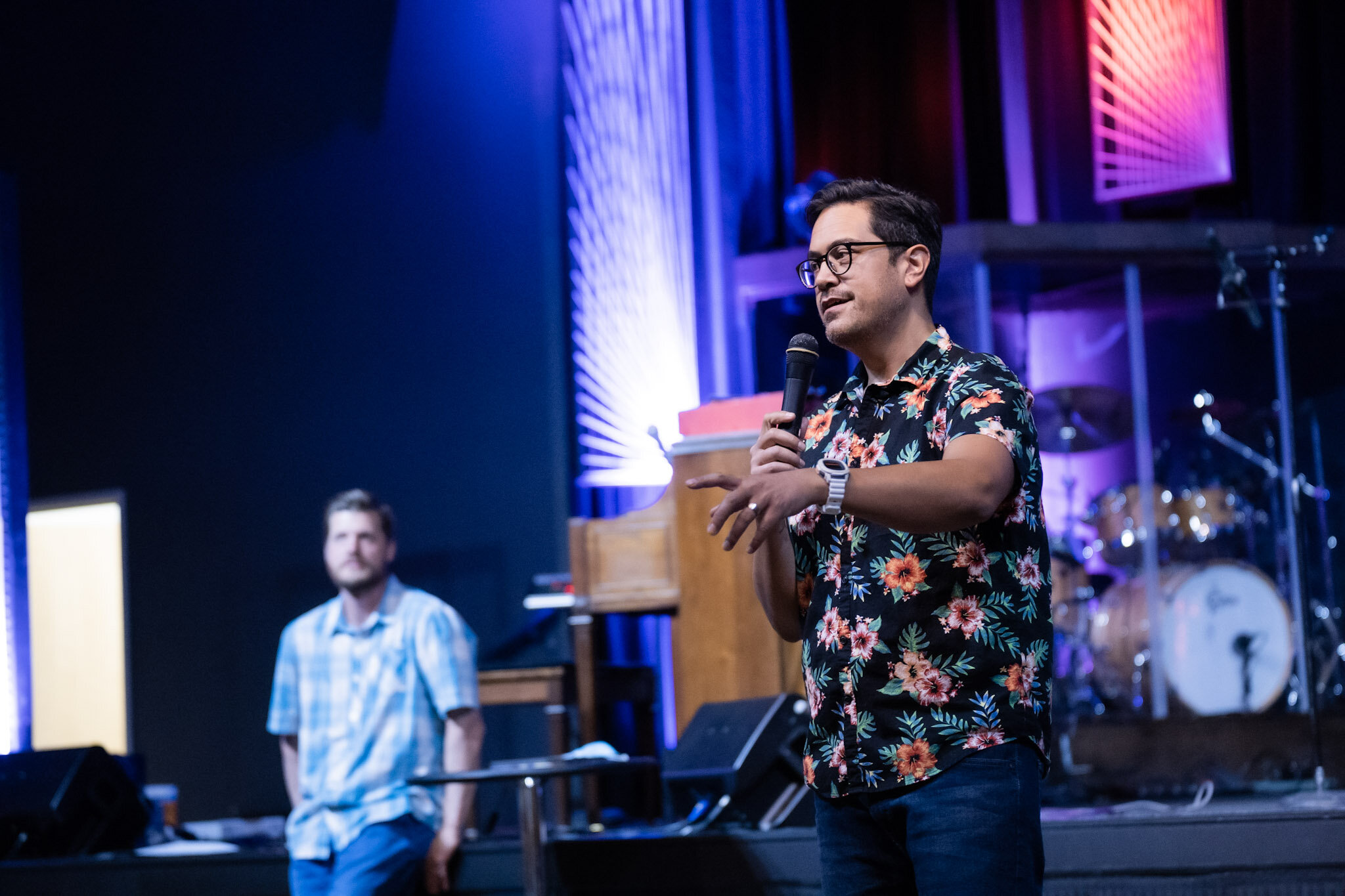
In a recent talk, Christian apologist and former debate coach Nate Sala, speaking on his channel Wise Disciple, made a simple but destabilizing observation: we are no longer arguing about facts… we are arguing about frameworks.
A framework is not an argument. It’s a lens. It tells you how to interpret everything that follows. It decides, before evidence is introduced, what counts as legitimate, what can be dismissed, and which voices deserve trust. In a debate round, frameworks are normal — but they are supposed to be paired with arguments, evidence, and warrants. The framework sets the table; the argument still has to earn its place.
What’s happening now is different.
Frameworks are being offered without arguments. And once they’re accepted, arguments become unnecessary.
How Persuasion Quietly Moved Upstream
Pay attention to how modern persuasion works.
Before facts are presented, you’re told how to interpret them. You’re warned that sources are compromised. That institutions are corrupt. That experts are lying. That unseen forces are pulling strings behind the scenes.
By the time evidence arrives, it has already been classified.
If it supports the framework, it’s “proof.”
If it challenges the framework, it’s “propaganda.”
This is why debates no longer feel like debates. They feel like parallel monologues spoken in different languages. People aren’t disagreeing about conclusions… they’re disagreeing about what reality even is.
And when you ask for clarification — for how a claim is justified, how the data supports the conclusion — the response is rarely an explanation. It’s a motive check.
Why are you asking that?
Who are you really aligned with?
What side are you on?
The question itself becomes suspect.
The Psychological Shift Most People Miss
Here’s the turn most analyses stop short of making. Once a framework becomes identity-forming, evidence stops feeling neutral. It stops feeling informative. It starts feeling hostile. Because now, evidence doesn’t just threaten a belief, it threatens belonging.
Framework-first persuasion works because it offers things facts never can on their own: a sense of community, a sense of identity, and a sense of moral positioning. It tells you not just what to think, but who you are for thinking it.
And once belief is tied to identity, changing your mind is no longer a rational act. It’s a social risk. A moral betrayal. A potential exile.
At that point, the cost of being wrong feels higher than the cost of staying wrong.
So most people don’t choose truth over tribe.
They choose safety… and call it conviction.
The Question You Avoid by Talking About “Them”
This is where the conversation gets uncomfortable, because it stops being about society and starts being about you. Do you care about facts only when they support what you already believe? Do you seek out evidence that challenges your framework… or do you reflexively discredit it before engaging it?
When was the last time you changed your mind about something that mattered?
If your answer is “never,” that’s not a sign of clarity. It’s a warning sign. It means your framework has become closed… sealed against correction.
At that point, facts haven’t failed. They’ve been demoted.
Christianity’s Awkward Relationship with Frameworks
This is where Christianity either confronts the moment or gets co-opted by it. Christianity does not claim that truth is constructed by power, or manufactured by language, or owned by the right tribe. It claims that truth corresponds to reality because reality was created by God.
That’s a dangerous claim… because it places truth outside human control.
It means arguments matter because they aim at something real. It means evidence matters because it points beyond us. It means reasoning matters because the world is intelligible. And it means no framework — religious or secular — is above examination.
This is why Scripture consistently invites scrutiny: test everything, reason together, examine claims, weigh arguments. Christianity does not say, “Don’t ask questions.” It says, “Ask them honestly.”
That posture is rare today, and increasingly unwelcome.
Nate Sala – Wise Disciple
Why Trust Broke Before Truth Did
There’s a deeper layer beneath all of this. We don’t just have an information problem. We have a trust problem. When trust erodes, people stop evaluating ideas and start evaluating people. They don’t ask, “Is this true?” They ask, “Is this person safe? Are they one of us?”
This is why character matters more than ever. Arrogance, carelessness with facts, addiction to outrage… these things poison even good arguments. A framework carried by someone who cannot be questioned will eventually collapse under its own weight.
Truth doesn’t need insulation. It needs integrity.
Truth or Protection… You Can’t Have Both
So we arrive at the question hiding underneath everything else.
Do you want truth? Or do you want protection?
Truth requires humility. It requires the willingness to be corrected. It requires the courage to let go of beliefs that no longer fit reality. Protection requires allegiance. It demands loyalty to the framework, even when it bends or breaks under scrutiny. Most people don’t consciously choose one or the other. They drift. They inherit. They conform.
But the cost is the same.
If facts only matter when they flatter you, then you don’t really care about facts. You care about preserving a story. And stories that cannot be questioned eventually replace reality… until reality pushes back.
A Final Pause, Not a Resolution
Christianity does not promise comfort. It promises alignment with what is. And alignment is rarely painless. Reality has a way of confronting us… not to humiliate us, but to free us from frameworks we mistake for truth. So the question remains open, unsoftened:
Do you even care about facts?
Or do you care more about staying where you are?